
Stop Saying “SEO Is Dead in 2026.” Google Still Depends on It — SEO Has Just Evolved Into AI SEO.
Google is STILL the King of SEO — and here’s how to rank #1 in 2026 Even with the rise of TikTok, Instagram, AI tools, and new search platforms, Google continues to dominate the world of search.
If you want long-term growth for your website, business, or content — Google SEO must remain your top priority.
Trusted by Leading Brands Worldwide
JETT Airlines
Youngs Coffee
McCullough Travel
Just In Time Logistics
AIR
Key Takeaways
SEO is not dead—it has evolved into AI SEO. Learn how to use AI tools for keyword research, search intent, and content optimization.
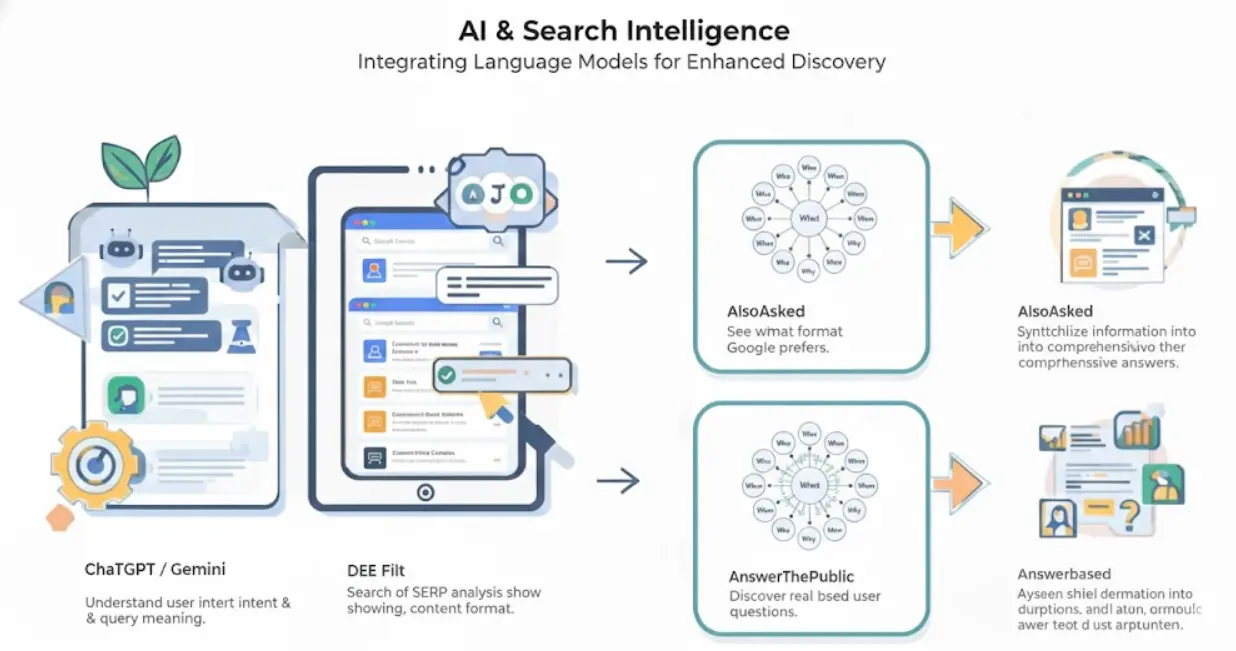
1. AI + Search Intent
Google ranks only the best answers, and AI’s main job is to understand the exact question behind a search. AI helps identify what users are really looking for, whether the intent is informational, commercial, or transactional, and guides you to match your content format with what Google already ranks. Tools like ChatGPT/Gemini, Google SERP analysis, AlsoAsked, and AnswerThePublic make this process easier.
Lesson: AI helps you think before you write.
2. AI for Keyword Research (Smart Way)
AI tools help uncover primary keywords, related questions, long-tail keywords, and semantic/LSI terms to fully cover a topic. Tools like Ahrefs (difficulty, volume, intent), SEMrush (keyword clusters and topic research), Ubersuggest (easy keyword ideas), and ChatGPT (long-tail and semantic expansion) make research faster and smarter.
AI = Keyword ideas + deeper topic coverage
3. AI SEO Workflow
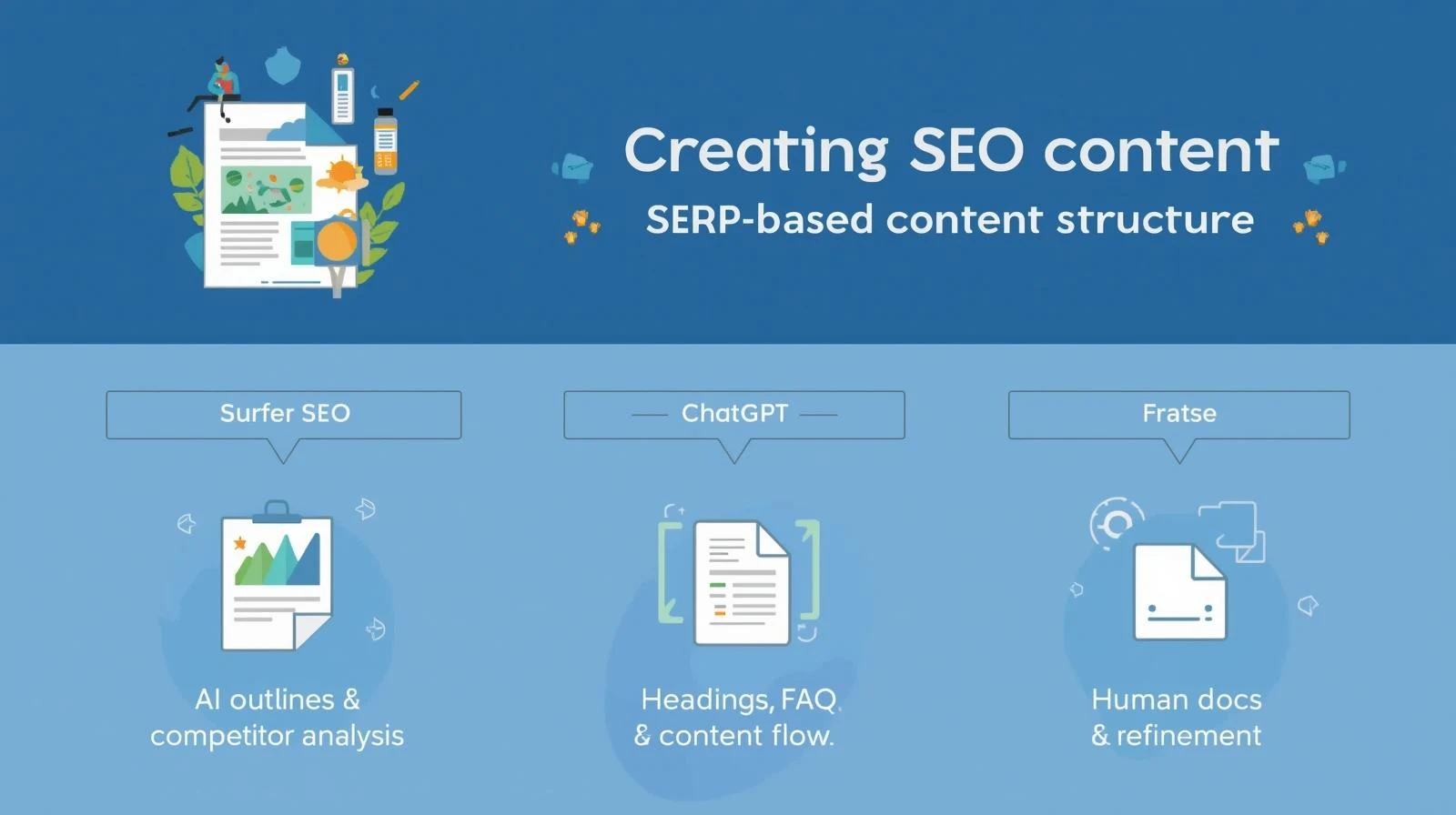
A real AI SEO workflow starts with keyword selection and Google SERP analysis. AI then helps generate a content outline, H1–H3 headings, and FAQs, after which human experience and editing are added for quality and trust. Tools like Surfer SEO (SERP-based structure), Frase (AI outlines and competitor analysis), ChatGPT (headings, FAQs, content flow), and Google Docs (final human editing) complete the process.
Lesson : AI is an assistant, not the final writer.
4. Content Creation with AI
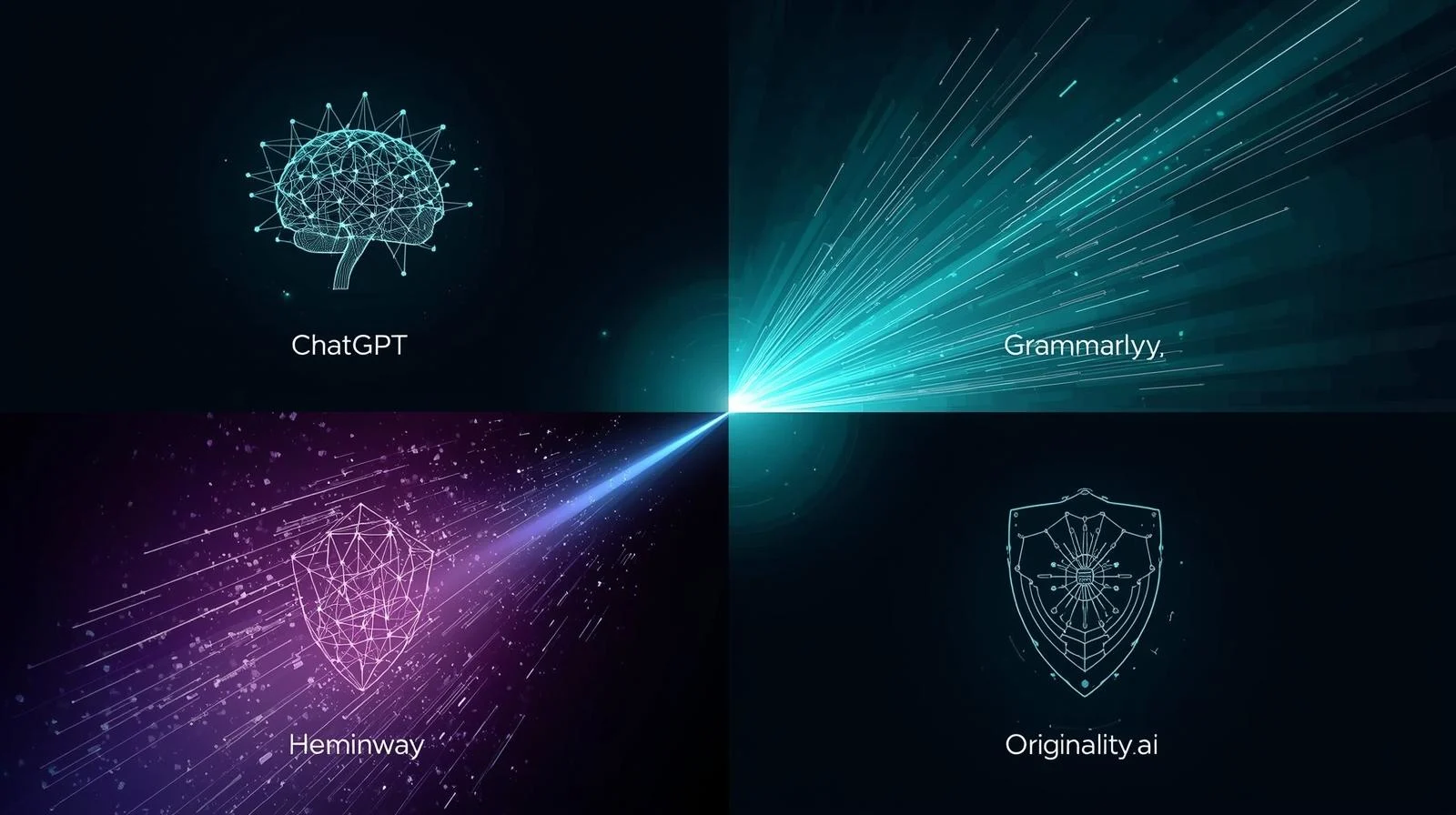
AI should support content creation, not replace human expertise. AI-only content builds low trust, while AI combined with real human experience leads to better rankings. Tools like ChatGPT or Jasper AI help with drafting and idea expansion, Grammarly improves clarity and tone, Hemingway App boosts readability, and Originality.ai checks originality.
Best practice: AI handles structure and research, humans add trust.
5. The Future of AI SEO (Core Message)
SEO has not disappeared — it has evolved into AI SEO.
Strategic AI users will grow
Blind copy-paste users will fail
Suggested Tools:
Google Search Console – Real performance data
Google Analytics 4 – User behavior & engagement
Screaming Frog – Technical SEO health
RankMath / Yoast SEO – On-page optimization
What Is the Real Goal of SEO in 2026?
The real purpose of SEO is to solve the user’s question. Google ranks content only when it answers the user’s exact need and matches their true intent—because Google doesn’t rank keywords, it ranks user intent. That’s why SEO is no longer just about keywords, but about fulfilling the user’s intent better than anyone else. In 2026, successful SEO means creating high-value content that AI systems can deeply understand and trust, focusing on real insights, accurate topic coverage, and a marketer’s mindset rather than keyword stuffing.
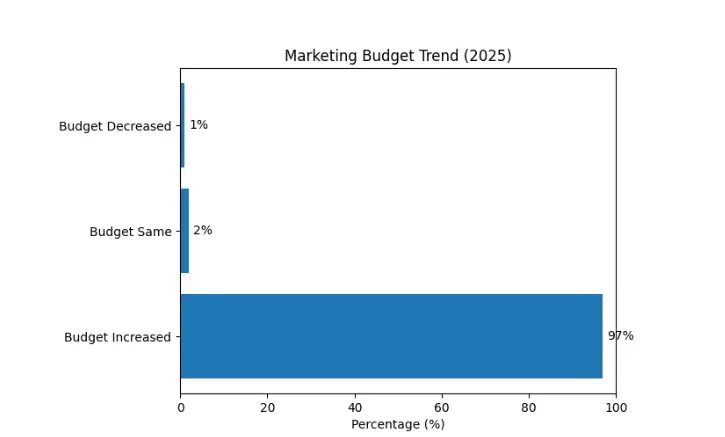
How are companies allocating their marketing budgets in 2025?
97% – Budget Increased: Almost all companies are increasing their marketing investment.
2% – Budget Same: Very few companies are keeping their budgets unchanged.
1% – Budget Decreased: Almost no company is cutting its marketing budget.
Future trends in SEO (Search Engine Optimization) and how AI (Artificial Intelligence) will change search and ranking in the next few years (specifically by 2026)
1. SEO Will Change Big Time by 2026
The video predicts that SEO (getting your website or videos to show up at the top in search engines like Google) will look very different in a few years.
2. Traditional Search Clicks Will Drop
Right now, when you search something on Google, many people click on link results. In the future:
Fewer people will actually click links.
Instead, AI systems might answer directly right inside search results (so people don’t click links as often).
3. AI Answers Become the First Step
Search engines and AI assistants (like ChatGPT or Google AI) are starting to answer questions directly instead of showing a list of links first.
This means people might talk to AI instead of browsing websites.
4. User-Generated Content (UGC) Will Be Very Important
Videos, posts, and content created by regular users (not big companies) will be more important.
YouTube, Reddit, and community content will help feed AI answers.
AI models use this content to learn and give answers.
5. Youtube & Social Content Will Dominate
Instead of traditional text sites/blogs:
YouTube videos and social media content will become more useful for search and SEO.
That’s because AI and search engines are now using video content directly.
6. Basic SEO Still Matters
Even if AI answers a LOT of questions:
You still need to optimize your website and content so AI will pick it up.
Good SEO basics are still useful.
7. Search Optimization Will Be Multi-Channel
Instead of focusing only on Google:
You’ll need to optimize across search engines, AI answers, YouTube, and social platforms to really get attention.
Why AI Search Rank Trackers Are Misleading ?
With the rise of AI-powered search platforms, many tools now claim they can track how your content ranks inside ChatGPT, Google AI Overviews, Perplexity, Gemini, and other AI systems.
1. AI Search Does Not Work Like Traditional Google Rankings
In traditional SEO:
One keyword
One search results page
One fixed ranking position
In AI search, this structure does not exist.
AI-generated answers change based on:
The user’s exact question
Question wording
Context and intent
Location and personalization
Because of this, there is no stable or fixed “AI ranking.”
2. AI Gives Different Answers to Different Users
A key point from the video:
10 users can ask the same question
AI can generate 10 different answers
This means:
Your content may appear in one response
But not appear in another
Or appear in a completely different position
This makes consistent rank tracking impossible in AI search.
3. AI Rank Trackers Do Not Use Real User Data
The video explains that most AI rank tracking tools:
Do not analyze real user interactions
Use a limited set of test prompts
Simulate AI responses and label them as “rankings”
These are simulations, not real-world AI search results.
4. AI Search Is Personalized and Context-Based
AI search results depend heavily on:
User intent
Prior context
Conversational flow
Because each user experience is unique:
A single “rank” number has very little meaning
Rankings cannot be universally applied
This further weakens the idea of AI rank tracking.
5. AI Search Is Still in an Early Stage
The video also highlights that:
AI search systems are still evolving
Standards are not finalized
Platforms change frequently
Tools claiming “100% accurate AI rankings” are overpromising.
6. How AI Rank Trackers Should Be Used
The video does not say these tools are useless.
Instead, it recommends using them correctly.
✔ Use AI rank trackers for:
Directional insights
Trend analysis
Discovery, not precision
❌ Do not:
Treat AI rankings as exact data
Make strategic decisions based solely on them
7. What Actually Matters for AI SEO
According to the video, the real focus should be on:
✅ Creating the Best Possible Answer
Clear, complete, and helpful responses to user questions
✅ Building Topical Authority
In-depth coverage of a topic
Multiple related pieces of content
✅ Establishing Trust and Credibility
Real expertise
Practical examples
Clear explanations
✅ Maintaining Strong Traditional SEO
Google search is still highly relevant
AI systems rely heavily on Google-indexed content
The Truth About AI SEO: How AI Search Really Works
Traditional SEO Alone Isn’t Enough
Just doing traditional SEO won’t guarantee that your brand gets mentioned in AI-generated responses like ChatGPT or Google’s AI answer panels.
Traditional SEO focuses on ranking in Google search results, but AI search pulls answers from many places and formats content differently.
AI SEO Works Differently from Regular SEO
It explains that AI-generated search results are not exactly search engine results like Google’s classic SERP.AI models synthesize information from multiple sources, so content needs to be structured and context-rich—not just optimized for keywords.
The Purpose of AI Search Is Answering Questions
AI search systems aim to provide direct answers rather than display a list of links.
So if your content is not created as a clear, concise, and authoritative answer, AI might skip it—even if it ranks well on Google.
AI Relies on Structured Signals
AI picks up from structured data and signals across the web, such as:
Clear on-page formatting
Frequently asked questions
Short, direct responses
This helps LLMs (Large Language Models) retrieve and cite your content.
Presence Across the Web Matters
AI doesn’t pull content exclusively from your website. It looks at other sources too:
Public pages
FAQ sections
Social profiles
Reviews & citations
So being visible and consistent in more places increases the chances of AI including your brand in its answers.
Topical Authority Is Key
Content shouldn’t just target keywords—it must cover a topic thoroughly:
Address related questions
Provide deep context
Organize content logically
Traditional SEO Still Supports AI SEO
Traditional SEO isn’t dead—it underpins AI SEO. If your site isn’t:
Crawlable,
Fast,
Well-structured
AI SEO Requires Better Content Signals
AI looks for:
clarity
factual accuracy
structured answers
ready-to-use informatioN
AI Search Is A Growing Opportunity
Rather than seeing AI search as a threat to SEO, the video frames it as a new opportunity.
If you make your content AI-friendly, your site can start showing up directly in answers—even sometimes above traditional search results.
Connect with Customers Who Are Looking for You with a Result-Oriented AI Digital Marketing Agency
Smart strategy + Creative content + Performance tracking→ Everything your business needs to win in the online world.
FAQs About Digital Marketing Agency
#1 Which are the best digital marketing services for small businesses?
The most effective digital marketing services for small businesses include:
Local SEO to rank on Google Maps
Social Media Marketing to attract local customers
Google Ads (PPC) for instant visibility
Website and digital marketing setup for your brand
Many affordable digital marketing companies in India offer these services at low INR rates.
#2 How can I find a digital marketing agency near me?
Search Google for “digital marketing agency near me” or “digital marketing services near me” to find local experts. Working with a local digital marketing company gives you better understanding of your audience, faster communication, and customized strategies for your city or region.
#3 What makes a top digital marketing agency different?
A top digital marketing agency focuses on results — not just clicks. It provides a complete strategy including SEO, PPC, web design, and content marketing. The best digital marketing agencies use data, creativity, and AI tools to deliver measurable growth.
#4 How much does a digital marketing company charge in India (INR)?
In India, digital marketing services cost between ₹10,000 to ₹1,00,000 per month, depending on the services you choose. A small digital marketing agency may charge less, while a full-service digital marketing agency offers premium packages with all-in-one support.
#5 What is a full-service digital marketing agency?
A full-service digital marketing agency handles everything — website design, SEO, Google Ads, branding, content, and social media. This is ideal for startups or businesses that need a complete digital marketing solution under one roof.
#6 Do digital marketing agencies design websites too?
Yes! A good digital marketing agency website design helps attract more visitors and improve conversions. Most digital agencies also offer web design marketing and SEO optimization to make your website rank higher on Google.
#7 What is the difference between a digital agency and a marketing agency?
A digital agency focuses mainly on online marketing — SEO, PPC, and social media — while a marketing agency might also include offline ads like billboards and print. Many companies now choose an integrated digital marketing agency that combines both.
#8 How can digital marketing help my startup?
A digital marketing agency for startups helps you create brand awareness quickly. From social media campaigns to SEO, they make sure your business is visible to potential customers — even with a small budget.
#9 What are the top digital marketing companies in the world?
Some of the top digital marketing companies in the world include WebFX, Ignite Visibility, Disruptive Advertising, and NP Digital. In India, Nexora Digital 360 is one of the emerging best digital marketing agencies offering affordable INR pricing for local businesses.
#9 How do I contact a digital marketing agency online?
You can visit an agency’s digital marketing website or search “digital marketing agency online” to request a free quote. Most digital marketing companies in India offer free consultations and customized INR pricing for your business needs.
About # Nexora Digital 360
Nexora Digital 360 is an AI-powered digital marketing agency dedicated to helping businesses grow online with smart strategies, creative content, and data-driven performance. From SEO and social media marketing to branding and PPC, we deliver complete digital solutions designed for real results.